Sermon preached March 21, 2010
Text: John 12:1-8
Joan Chittister: “There is no substitute for the drama that goes on within the self” (Living Well, 41). She may be right, but what if the drama within the self is like a Hitchcock movie – intense and dark?
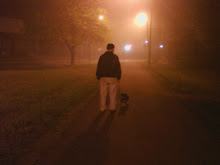
I don’t know what it was, but Friday March 5 I woke up feeling out of sorts. I was feeling kind of blue, kind of cranky, all mixed in together. Little things at the start of the day, a glitch with my computer and my pedometer, a small spill at breakfast, confirmed that this was a lousy day. Negativity engulfed me. I wasn’t much company and I was alone. I felt all this, could step back a little and recognize what was happening, but I struggled with this much of the day. It was sort of a long day’s journey into night, at least until finally, after struggling, the fog lifted and I could feel o.k. again.
Ever have days like those, or times like those – times when the inner struggle was real and difficult? This morning’s gospel text, strange and brief, invites us to look inside, to look at what’s going on within, to acknowledge that there can be darkness inside and to struggle with it. The text also invites us to acknowledge the good within and to try and strengthen that by the grace of God, with the help of God’s Spirit.
The text is parabolic. Jesus told stories which invited creative and surprising reflection. The author of the Gospel of John often tells stories about Jesus that have the quality of parables, and I think this is one. There is a lot going on here, and a lot that has the quality of parable. The setting of the story is a dinner party, but this is an odd time for a party. Rumor has it that Jesus is in trouble with the authorities, that they are looking to arrest him. Yet there is a party. At the party a very strange and wonderful thing happens. Mary, the sister of Lazarus and Martha, took costly perfume, poured it on the feet of Jesus and wiped his feet with her hair. If the act is not strange enough in itself, some of the details give this story the quality of parable. Judas says that the perfume could have been sold for 300 denarii - nearly a full year’s wages for a laborer. That amount of money could actually have bought about 100 pounds of perfume. The amounts here are extravagant, lavish. The act itself is wildly countercultural. Jesus should not have let Mary touch him in this way. Mary risks an intimacy that breaks the social conventions of the time. Letting her hair show would also been unseemly.
Then there is Judas. He raises a good question, a practical question, a question of justice. “Why was this perfume not sold for three hundred denarii and the money given to the poor?” Why indeed. Then the author invites us inside – inside the heart and mind of Judas. “He said this not because he cared about the poor, but because he was a thief; he kept the common purse and used to steal what was put into it.” The parable of Mary and Judas invites us to look inside.
The story ends with a startling line from Jesus, one which is easily misunderstood. “You always have the poor with you, but you do not always have me.” More on that later.
The parable of Mary and Judas, if I might call this story by that name, sets up this fascinating contrast between the two. We have the extravagantly generous heart against the self-centered heart, the open heart against the closed heart, the joyous heart against a spirit unable to celebrate, a spirit of creative risk against one of narrow caution. The parable invites inner reflection because the Judas heart is cloaked in “goodness” – concern for wastefulness, concern for the poor. It invites us to ask – “what’s going on inside?’
Let me tell you that what’s going on inside most of us is that we have within us both the Mary heart and the Judas heart. We have the capacity to be generous, extravagant, open, joyous, to take creative risks. We have the capacity to be self-absorbed, narrow, pinched, overly cautious. The work of God’s Spirit in our lives is the work of strengthening our Mary hearts and struggling against and diminishing the Judas part.
And in this struggle, I don’t think it does us much good to deny the Judas part. We don’t have to call it that. That can seem harsh, but something like that is within us, a darkness within against which we struggle. When we are honest about that, we can even see how that gets masked by good things. Judas masked his angry, self-centered, pinched heart by evoking concern for the poor. The Judas heart is insidious that way. There is a lot in the world to be angry about – poverty, injustice, senseless war, the inability of long-standing enemies to see how destructive their fighting is and to make peace, the inane comments of a Glenn Beck who tells Christians to leave their churches if their churches talk about social justice. But righteous indignation has its limits, and if anger is our default emotion, inner work needs to be done.
I am currently reading a novel called The Book Thief for an interfaith book group I lead. It is a fascinating read, and in it there is a wonderful example of the divided heart that is part of the human condition. The story is set in Germany during the Nazi regime. The contradictory politics of Alex Steiner: Point One: he was a member of the Nazi Party, but he did not hate the Jews, or anyone else for that matter. Point Two: secretly, though, he couldn’t help feeling a percentage of relief (or worse – gladness!) when Jewish shop owners were put out of business – propaganda informed him that it was only a matter of time before a plague of Jewish tailors showed up and stole his customers. Point Three: but did that mean they should be driven out completely? Point Four: his family. Surely, he had to do whatever he could to support them. If that meant being in the party, it meant being in the party. Point Five: somewhere, far down, there was an itch in his heart, but he made a point not to scratch it. He was afraid of what might come leaking out. (59-60)
This may be getting out of hand. Do we really have a certain darkness within that can be compared to a Judas or someone who uneasily joined the Nazi Party? Remember, I began with my own divided day, my own inner struggle. I don’t want us to overplay the drama within, I just don’t want us to deny it. There is good that comes from looking within and acknowledging that all is not always sweetness and light inside. There is some good in taking the long day’s journey into night. It is an important step into creating more light inside and in the world.
“In Praise of Self-Deprecation” Wislawa Szymborska
The buzzard has nothing to fault himself with.
Scruples are alien to the black panther.
Piranhas do not doubt the rightness of their actions.
The rattlesnake approves of himself without reservations.
The self-critical jackal does not exist.
The locust, alligator, trichina, horsefly
live and they live and are glad of it.
The killer-whale’s heart weighs one hundred kilos
but in other respects it is light.
There is nothing more animal-like
than a clear conscience
on the third planet of the Sun.
Acknowledging the inner struggle is an important step is strengthening the good heart – the generous, joyous, open, creative heart. And that generous, joyous, open, creative heart will include a heart open and generous toward the poor. Jesus, in responding to Judas in this parable may be referring to a part of their shared religious tradition – Deuteronomy 15:11 – “there will never cease to be some in need on the earth.” The whole verse, which parables are good at making cryptic reference to reads like this. Since there will never cease to be come in need on the earth, I therefore command you, “Open you hand to the poor and needy neighbor in your land.” Jesus’ response to Judas should never be taken as an excuse for doing nothing for the poor. The generosity of a Mary heart includes opening up to the poor and needy.
“There is no substitute for the drama that goes on within the self.” Sometimes that drama is a struggle between conflicting tendencies – toward a generous, open, creative, joyous heart or toward a pinched, narrow, self-absorbed crimped heart. This parabolic story invites us to acknowledge the struggle, not to berate ourselves but to strengthen the good heart, to let God’s grace and Spirit work more completely in our lives to strengthen the good heart. Psychoanalyst Michael Eigen has a strong sense of this inner struggle. He writes about humans as “wounded-wounding creatures” (Age of Psychopathy, 8), but he also writes, “there are so many ways to light up the world” (The Electrified Tightrope, 276). There are so many ways to light up the world. There are so many ways for each of us to light up the world. But we only shine brightest when we are aware of, and struggle with those parts of ourselves that are not light. We shine brightest on the other side of the long day’s journey into night. We don’t ever take that journey alone. We don’t ever struggle alone. Jesus goes with us reminding us always that there are so many ways to light up the world. Amen.
Friday, March 26, 2010

Tuesday, March 16, 2010
Ever Present Past
Sermon preached March 14, 2010
Texts: Luke 15:1-3, 11b-32
How many of you watched the Academy Award show last Sunday night? I watched different parts of it, sometimes while doing something else. One of the parts of the show that I appreciate most is the “In Memoriam” segment – the portion of the program where some of those who had been a part of the movie industry and died during the past year are remembered. When I first started watching the Oscars years ago I am guessing that I knew very few of those being memorialized – some were probably silent film stars. This year I recognized many: Karl Malden, David Carradine, Dom DeLuise, Ron Silver, Horton Foote. It is a sign of growing older. There were some forgotten, like Farrah Fawcett and Bea Arthur; and some who were all too young – Natasha Richardson and Brittany Murphy.
But we like the Academy Awards because we enjoy the movies and we enjoy the movies because we love a good story. We not only love a good story, stories shape us. I grew up in a home that was not the most progressive place when race was mentioned. My dad did not say a lot about African-Americans, but what he did say was too often derogatory. He used unflattering slang sometimes. Apparently he came by some of those attitudes naturally. A couple of years ago, my grandmother said to me she never really liked black people – except she used another word. One reason I am different is the impact of a movie – Brian’s Song - a made for TV drama about Gayle Sayers, an African-American running back for the Chicago Bears, and his friendship with another Bears running back named Brian Piccolo, a Caucasian. Is that the only reason I don’t hold some of my dad’s and grandmothers attitudes about African-Americans? No, but it played a role.
We love a good story and stories shape us. Good stories also often work at different levels, or they contain many layers. That’s true of the story for today from Luke’s gospel. In fact, we have here a story within a story. First there is the story of Jesus in Luke’s gospel. Various religious authorities and leaders see Jesus’ behavior, how he attracted “tax collectors and sinners” and welcomed them. He even ate with them. Such behavior was considered unbecoming among the religiously serious. To their criticism, Jesus responds with a series of stories – a story about lost sheep and how joyful the shepherd is when the lost sheep is found, a story about a lost coin and how happy is the woman who finds the coin she has lost. Then comes the story which we heard – about a man and his two sons. Jesus is telling stories which are meant to teach about God and God’s dream for the world. God seems to welcome all into God’s dream, and when they find their way into it, there is cause for great joy.
So we have this overarching narrative with Jesus telling stories and then we have the story he tells. “There was a man who had two sons.” It is a richly textured story in itself and could easily serve as the basis for a month of sermons. So what are you doing for the next ninety minutes?
It is a rich story, and I want to pursue one angle, an angle in keeping with the overall theme for Lent – “From Darkness to Light.” Today the focus is “Confronting the Darkness of the Past.” What do I mean by the darkness of the past? The past is dark because it is often murky. It can also be dark because it contains pain. Certainly not all the past is dark in either of these senses. Sometimes our memories are clear as a bell. Parts of our past are joyful, not painful – our first kiss, the birth of children, the first time someone called you mom or dad or grandma or grandpa, graduation. But there is murkiness in our past and pain in our past. Michael Eigen writes, “one cannot experience without suffering” (Feeling Matters, 2). I think he is right.
Why even bother with the past? The past is past, isn’t it? Well yes and no. There is truth in the words of novelist William Faulkner, “The past is not dead. It’s not even past.” (Requiem for a Nun, Act I, scene 3, p. 80). I balance that statement with another that I find deeply helpful and meaningful. Jack Kornfield, “Forgiveness means giving up all hope of a better past” (The Art of Forgiveness, Lovingkindness, and Peace, 25). But I don’t think Kornfield is trying to say that we just forget and move on. We cannot change the past, and we need to know that. We can, however, reweave it into our present. We can see it differently. We can let it be present in our lives in new ways. Kornfield is saying that forgiveness involves acknowledging that we cannot change the past, yet not letting the past imprison us.
We are our histories, but how we weave those histories together determines whether we grow through and beyond that history or whether we are imprisoned by it. The past never remains past. While we cannot change the past, nor change that it is part of our present, we can change how it is a part of our present.
These lessons can be found in the story of the compassionate father, the wandering and wasteful son, and the angry, small-hearted, petulant son. Consider the father. His past relationship with his wandering and wasteful son is filled with pain, anger, hurt disappointment. His son had taken the money and run. You don’t sense he even let his father know if he was dead or alive. When we arrive at that moment in the story when the wandering and wasteful son returns, the father cannot change what has already happened. He can choose how he will weave what has happened into his reaction to this son right now. He can take his pain and hurt and disappointment and turn his son away, or demand that the son stay distant for awhile – work his way back into the good graces of his father. Few would blame him if he did either. Instead the father weaves all that has happened with love and compassion. He ran, put his arms around his son and kissed him.
The wandering and wasteful son might have known bitterness. Surely his father knew he would not manage his new found wealth well. Why had he given in? He should have been stricter. This son had experienced humiliation, and that can make one bitter and angry. He could have talked himself into continuing stubborn defiance of his family ties. Imagine him saying to himself, “I am going to get back all that I lost. I will not return home until I am somebody.” Instead this son weaves all that has happened with humility and love. He cannot change what he has done, but he can say that perhaps he could have done better. He can seek reconciliation.
Then there is the “good son” who is also angry and small-hearted and petulant. He remains imprisoned by the past. His brother left him to keep up the family business and to take care of dad. He will not reweave his own anger or hurt with anything else. The past is not dead for him, and it will be present as motivation to seethe. His imprisonment by the past even causes him to misread it. To a father with whom he has shared a life he says, “Listen! For all these years I have been working like a slave for you, and I have never disobeyed your command; yet you have never given me even a young goat so that I might celebrate with my friends.” Do you think this is a very accurate picture of the past? We are left to wonder whether this son will have the courage to reweave a painful past into a more compassionate present and a more hopeful future.
So, how are you and I going to weave and reweave the past, the ever present past, into our present and our future? Let me, as I move toward concluding, identify four areas that may be worthy of work as we seek to move from darkness to light.
We have made mistakes and been unloving sometimes. All of us. I have made mistakes and been unkind and unloving sometimes. How will we deal with these darker moments of our past? Sometimes we choose to try and bury such things. Our inability to acknowledge that we make mistakes, even more that we have been unkind and unloving sometimes, leaves us constantly on the defensive. If I cannot admit my mistakes and my sins, I try and defend my every action instead of acknowledging my humanity. Will we weave this dark part of the past into the present, instead, with humility and compassion – compassion for ourselves? Will we be like the younger son in the story who does just that? Or will we deny our humanity, refuse humility and become like the bitter big brother?
We have been disappointed and hurt in the past. Suffering has been inflicted on us. People have been unloving and unkind toward us. Can we weave these dark experiences of the past into the present with forgiveness and love, like the father in the story? Let us admit that forgiveness is a process and a goal toward which we move. We may not get there, and certainly not quickly when the hurt has been deep, but if we are not on our way there, where are we going? How are we weaving these past hurts into our present?
The past is not simply individual. We have a social past as well. This week I had the privilege and pleasure of hearing Bill McKibben, author and Methodist lay person discuss some of his writing, share some of his concerns. You helped make that possible as this small gathering of clergy and lay people from local churches was held here Tuesday afternoon. As I listened to Bill, I was struck by some of the elements in our social past. We are a country whose culture has moved ever more toward a deep individualism. Individuality is important, but so is community. Will we be imprisoned by our past and keep moving toward more sweeping individualism, or will we choose to weave back in the balancing theme of the commons, the community, the common good? McKibben also argues that the economic ideas of the past drive us in a certain direction. We think of the goal of our economic life as growth and production. Growth, up to a certain point, is good. Production of more goods matters to those on the lowest end of the economic spectrum. But McKibben argues that past a certain point, these inherited ideas from the past are not life-giving for us. Studies show that more does not make us happier when our basic needs are met and we have some security about this. Our planet may not be able to sustain the kind of economic growth we envision with our current models. Perhaps we need to weave the story of growth anew, imagining wealth as wealth of human connection, not simply economic production.
We often inherit from our social past ideas of insiders and outsiders. We inherit barriers of prejudice and exclusion. In our society some of the most powerful have been ideas about race and sexual orientation. As a society, we are working on weaving a new story about race, about our common humanity. The work is incomplete, but we have begun. Our work in breaking down barriers around sexual orientation is not as far along, and if we are honest, one place we have inherited ideas about excluding GLBT persons is the church. We have misread our Scriptures to reinforce our discomforts. Can we reweave this story and confront the darkness of our past exclusion? Can we weave from our dark past a newer story of justice and compassion – values that are much deeper and more frequently mentioned in our Scriptures than texts about sexual orientation?
Stories have power. Will we weave this story from the past – this story of the compassionate father, the wandering and wasteful son, and the angry, small-hearted, petulant son, into our lives more deeply so that the ever present past does not imprison us with our past mistakes, our past hurts, our past paradigms, our past prejudices, but rather serves as a place from which we grow more compassionate, more loving, more relational, more just? May it be so by the power of the love and grace of God, who is like a father running out to meet a long lost son and throw him a party to which all are invited. Amen.
Monday, March 1, 2010
Afraid So
Sermon preached February 28, 2010
Texts: Psalm 27; Luke 13:31-35
Afraid So Jeanne Marie Beaumont
Is it starting to rain?
Did the check bounce?
Are we out of coffee?
Is this going to hurt?
Could you lose your job?
Did the glass break?
Was the baggage misrouted?
Will this go on my record?
Are you missing much money?
Was anyone injured?
Is the traffic heavy?
Do I have to remove my clothes?
Will it leave a scar?
Must you go?
Will this be in the papers?
Is my time up already?
Are we seeing the understudy?
Will it affect my eyesight?
Did all the books burn?
Are you still smoking?
Is the bone broken?
Will I have to put him to sleep?
Was the car totaled?
Am I responsible for those charges?
Are you contagious?
Will we have to wait long?
Is the runway icy?
Was the gun loaded?
Could this cause side effects?
Do you know who betrayed you?
Is the wound infected?
Are we lost?
Will it get any worse?
Jesus confronts an “afraid so” moment in this morning’s Scripture reading. Pharisees are warning him that as he heads toward Jerusalem he risks being killed by Herod. Will it get any worse? Afraid so. Threats from political authorities who have the ability to carry out those threats are something to be afraid of. And Jesus may have felt some of that fear, but if so, he does not let it define him, does not let it get in the way of his mission to cast our demons and perform cures today and tomorrow and until his work is finished. Jesus responds to a fearful circumstance with courage and compassion.
Fear. We all experience, and sometimes even seek it out in small doses. Part of the thrill of a roller coaster is the small bit of fear that heightens our senses for the ride. The same dynamic applies to movies that play some on our fear. Fear has a healthy side to it. Theologian Donald Evans put it well. “Fear can mobilize my body and mind into a temporary unity to meet some specific threat; it focuses my strength and attention in a particular direction” (Struggle and Fulfillment, 44). If I am walking in the woods and see a bear some distance off, I wouldn’t mind just a little fear mobilizing me to action.
But fear becomes a problem when it becomes too pervasive, when it begins to define our basic life stance, when it is the major chord in our response to the world. Henri Nouwen writes perceptively about this kind of fear. Often fear has penetrated our inner selves so deeply that it controls, whether we are aware of it or not, most of our choices and decisions…. Fear can make us angry and upset. It can drive us into depression or despair. It can surround us with darkness and make us feel close to destruction and death. (Lifesigns, 15). Fear becomes pervasive in many forms – especially fear of some of life’s inevitable issues. We fear change. We fear loss. We fear difference. We fear intimacy. We fear our own power and freedom. We fear making mistakes and looking foolish. We fear meaninglessness.
When fear becomes so pervasive it becomes insidious. Brain research shows that fear and anxiety can interfere with clarity of thought. Pervasive fear can paralyze us, inhibit action, or move us to act in ways that hurt others or distance others. Again, Donald Evans: [Fear] scatters my strength and tears me apart as I respond to a nameless threat which teases me and torments me from every direction at once. I lose my grip on myself and the world I live in. (op. cit.) When fear becomes pervasive, a life stance, we even lose touch with the source of that fear.
Because fear threatens to become pervasive and therefore insidious, the Bible, Christian faith, the God of the Bible and our faith speak a word – do not be afraid. “The Lord is my light and my salvation; whom shall I fear. The Lord is the stronghold of my life; of whom shall I be afraid…. Let your heart take courage.” It is not that there are no reasons to fear. The Psalmist does a good job of mentioning his predicament. Evildoers, adversaries and foes assail him, they are breathing out violence. He even hints that God can seem hidden. It is not that there are not things in the world to be afraid of, but making fear a pervasive life stance destroys life. I have always appreciated Parker Palmer’s words on fear, and I believe they reflect the Psalm. It is no accident that all of the world’s wisdom traditions address the fact of fear, for all of them originated in the human struggle to overcome this ancient enemy…. “Be not afraid” does not mean we cannot have fear. Everyone has fear…. Instead the words say we do not need to be the fear we have…. We have places of fear inside us, but we have other places as well – places with names like trust and hope and faith. (Let Your Life Speak, 93-94)
As we continue on our Lenten journey from darkness to light, the journey means confronting pervasive fear and grabbing hold of and being grasped by the light of faith. Faith can translate into courage, I think.
Faith is the courage to live with compassion in the face of those powers that threaten life and well-being. Herod is a fox, Jesus says, and then goes on to compare himself to a loving hen who desires nothing more than to gather her brood under her wing. The forces of the fox are alive and well – the forces of violence, injustice and oppression, the forces of hunger and poverty, the forces of hatred. Faith is the courage to live with compassion nevertheless. Faith is the courage to keep on with the mission of Jesus to bring healing to the world and to remind all God’s creation that they are cared for by this God whose symbol is not the tyrant Herod, but the Jesus who reaches out like a mother hen to gather them all in.
Faith is the courage to make needed changes in our lives and in the world. A favorite prayer of mine remains Reinhold Niebuhr’s Serenity Prayer. “God grant me the grace to accept with serenity the things that cannot be changed, the courage to change what should be changed, and the wisdom to distinguish the one from the other.” Grace is serenity, wisdom, and courage. Faith is the courage to make needed changes. Change is difficult in our lives, in our church, in our world. But change happens and it is up to us whether we will make positive changes in our lives, our church and our world to meet the new conditions in the world
Faith is the courage to live compassionately with loss. Life involves loss, and we will say more about that next week. But because there is loss in life, fear of loss can lead us to hide from life itself. Instead in the midst of loss, may we have the courage to live with compassion. Many of us have been moved this week by the courage of the Canadian Olympic figure skater Joannie Rochette. Joannie’s mother died unexpectedly on Sunday as she arrived in Vancouver to watch her daughter compete. Joannie, with great courage and grace, skated. On Tuesday she wept when she finished her short program, and was in third. Thursday night she skated beautifully and won a bronze medal. Loss happens, and faith is the courage to live with grace and compassion in the face of loss.
Faith is the courage to welcome difference – to listen well, to hear deeply and to learn from people whose experience of life is different from ours. Fear of difference cuts us off from learning about some of the richness of the human experience, and this fear is tragically pervasive. We fear others who look different, who talk different, who come from different places, who practice different religions. Peter Gomes, Minister at Memorial Chapel at Harvard, writes movingly about a fear of difference he believes to be pervasive in our society. The contemporary fear gripping America appears to be a fear of the normalization of homosexuality. What a strange pathology this is – fear that the sexual identity and practices of a minority will somehow taint the identity and practices of the majority…. This irrational fear of the sexual other is all the more dangerous because it conceals itself within the sanctions of religion. (The Scandalous Gospel of Jesus, 106) Faith is the courage to shine the light of love into the dark fear of difference.
Faith is the courage to share ourselves. We fear intimacy because we often fear that when people get to know us, they will reject us, and we have experienced that from time to time. But fear of rejection leaves us lonely and isolated. We need to risk appropriate intimacy with other, we need the courage to offer ourselves to others for our growth and theirs.
Faith is the courage to exercise our freedom. “Will you use the freedom and power God gives you to resist evil, injustice and oppression in whatever forms they present themselves?” We say “yes” to that at baptism and confirmation. Faith is the courage to say “yes” to that again and again and again. You have some freedom. You have some power. You can work to change your life and your world by the grace of God. Faith is the courage to claim that.
Faith is the courage to act even knowing we will make mistakes and our mistakes may seem foolish. Those of us who have ever struggled with perfectionist tendencies, and I am among them, know how deep fear of failure can run. We know how deeply we fear looking stupid, foolish, unprepared, incompetent. Faith is the courage to act in a world where not everything turns out just as you might hope.
Faith is the courage to live with compassion, love and justice in spite of powerful voices that tell you that these have no meaning, that life is about struggle to get what you want, and the more you get the better. Faith is the courage to proclaim and live that the way of compassion, love and justice is the way to meaningful life. It is the way of Jesus Christ, the way of God.
From darkness to light. From fear to courage, compassion and love. The church is a community of comfort in a fearful world. The church is a community of courage in a world where fear can sometimes seem sensible as a pervasive stance. The church is a community of compassion, seeking to make the world less fearful.
Is this going to hurt? Afraid so. Will it leave a scar? Afraid so. Could this have side effects? Afraid so. Will it get worse? Afraid so. But fear need not define us, should not define us. Faith, hope, and love do. Do not be afraid. Amen.
Friday, February 26, 2010
Tempted By the Fruit of Another
Sermon preached February 21, 2010
First United Methodist Church, Duluth
Texts: Deuteronomy 26:1-11; Luke 4:1-13
This may be difficult for you to imagine, but this story is true. Years ago, when I was in college, I had a number of people tell me I looked like the actor John Ritter. This was when he was on the television show Three’s Company – a show about a single man who ends up sharing an apartment with two single women so they can all save on the rent. Suzanne Sommers played one of the roommates. It was not high art, but being thought to look like John Ritter wasn’t so bad. Back then, if someone asked who I might like to play my life if a movie were made, I could have gladly said, “John Ritter.”
Times change. If I were more honest with myself and were asked “Who should play you if a movie were made about you life?” I should probably answer someone like Danny Devito or Stanley Tucci. Times do change.
Have you ever in some moment of reverie thought about what a movie about your life might be like? Have you ever wondered who you would like to play the starring role? Have you ever wondered what it might be like to make movies for a living? Have you ever imagined your life being very different from the life you have? I am guessing that we all have done that, and it is fun to imagine such things.
But I also wonder if we are not tempted to do more than pretend our lives were very different. Are we tempted, sometimes, and do we give into the temptation, sometimes, to hide from ourselves, to hide from God’s call and invitation in our lives right here, right now? Are we tempted to imagine that God really can’t do much with the lives we have, with the person we are? Are we tempted by the fruit of another – another life, another identity?
The temptation story of Jesus can be read as a story of temptation to be other. Jesus has had a powerful experience of the Spirit at his baptism, and feels led by this same Spirit into the wilderness. Jesus is discerning the meaning of these powerful Spirit experiences. How is it possible that he, a simple person whose mother is Mary and whose father is not a learned scholar nor religious leader but a laborer, how is it possible that God’s Spirit should be calling him so powerfully? What will this call mean for his life? How can he live it out with integrity and authenticity in the context of who he is?
The temptations to be other come. If only he were some kind of magician wowing the crowds with turning stones into bread. But he knows that is he is to live out this call of God in his life he needs to use whatever Spirit power he has not to wow the crowds with magic, but to heal and feed. If only he became a part of the ruling elite, think of the possibilities for getting his message out. Think of the good he could do. But his call is not to rule, but to change the rules, to share a picture of what God’s dream for the world is. “What would the world be like if God’s dream for it were fully realized?” the hungry would be fed, the outcasts would be welcomed, the brokenhearted would be cared for, peacefulness and peace would characterize lives and relationships. If only he could get everyone’s attention with spectacular feats, demonstrating that he is so special to God that the normal rules don’t apply, think of the disciples who would line up. But his call is to invite people through the wisdom of his teaching and the quality of his compassion. Jesus is tempted by the fruit of another, and he resists.
We are tempted, sometimes, to think in our own “if only” terms. Rabbi Zusya said, “In the coming world, they will not ask me, “Why were you not Moses?” They will ask me, “Why were you not Zusya?” (The Spirituality of Imperfection, 2) That old story is an indication of the prevalence of the temptation humans experience to wish they were other, to live in “if only” terms. If only I were born in a different time and place, if only I were taller-richer-smarter-more successful, if only I had made different decisions way back when - - - then my life would be better, then God could really do spectacular things through me. God calls us all, right here, right now as we are, to be the best we can be, to share God’s love with our lives as only we can.
Are there things in our lives that need to change sometimes? Of course. But that change process always begins where we are with who we are. Knowing about change in our lives also involves recognizing what cannot be changed. We cannot change where we were born, when we were born, and to whom we were born. We cannot change past actions, our own, or those things which are a part of our history – both happy and hurtful. All we can do with the past is grow in our understanding of it and weave and reweave it into our present. That is important work, and an important part of growing, but we cannot change that past and those things which have brought us to this place in life. And that’s o.k. because it is in this place in life that God calls us. It is as we are that God invites us to be God’s Spirit people in the world. Each of us has a call to share love and bread and healing and wisdom with the world, and only we can share it in our own way.
And all these lessons about our individual lives apply to our shared life as First United Methodist Church. We are tempted to wish, sometimes, we were other, but need to remember that God calls us right here, right now, with who we are, with our history and all, to be the best First UMC we can be, touching the world with God’s love, standing up in the world for God’s justice, bringing hope and healing as only we can. We may wish we lived in a different time when church life wasn’t quite as complicated as it is today, when Sunday morning church was the only thing happening on Sunday mornings. But we are called to minister in the name of Jesus Christ in this day and time. There are times when we may wish forty years ago we had hired a different architect so that our building does not have some of the shortcomings it has. Some day we, as a congregation may even decide that our facility has become more of a roadblock to ministry than a means to ministry. Right now, this is where we are and we are called to use this gift of a place to the best of our ability – to do things like house parental visits and music lessons, day care and health groups, to offer space to AA, to give the Hmong a place to gather at their new year, to be the site of blood drives and food drives and dental clinics, to be front porch for our community; to be a place where a congregation gathers and grows and sends itself into the world to transform it.
History is not destiny, but it is a resource for our ministry. The Israelites recognized that. Every year they were to rehearse their history. “A wandering Aramean was my ancestor; he went down into Egypt and lived there as an alien, few in number, and there he became a great nation, mighty and populous. When the Egyptians treated us harshly and afflicted us… the Lord saw our affliction, our toil, and our oppression. The Lord brought us out of Egypt…” Our history has shaped our values as a congregation. A few weeks ago I offered a picture of what disciples of Jesus Christ here at First UMC look like, or what our values say they look like. Disciples of Jesus Christ here at First UMC are welcoming and inclusive – we work to keep barriers from getting in the way of community here – barriers of age, race, background, orientation. Disciples of Jesus Christ here are committed to growth – we see life as a journey. Disciples of Jesus Christ here want to bring out the best in each other, affirm our gifts. Disciples of Jesus Christ here ask questions – we want a faith that appeals to head, heart and hands, one that is open to mystery and complexity. Disciples of Jesus Christ here really want to make a difference in the world. Our history has brought us to these values and we will change our life together best as we claim these values. And we do want to change. One part of our history that I recently discovered is that for quite some time, we have tended to worship on Sunday about a third of our membership. I would like to see us do better there. But we begin where we are. God calls us as we are in this place and time to be a certain community of faith that only we can be because only we have our history and our people. That is not to diminish God’s call to other congregations, because a part of who we are is a congregation that welcomes working with others. It is simply to affirm our call to be the best First UMC we can be.
The theme for Lent this year is “from darkness to light.” Darkness is a place where our identity is hidden away. The light of God’s love helps us see who we are, affirm who we are, even when we recognize need for change, and invites us to be lights to the world. May we be so. Amen.
Ash Wednesday
Tonight, Lent begins, and this season is often associated with serious spiritual disciplines and spiritual practices that are not always easy or fun. So I am going to begin by sharing a poem. Perhaps I should give up poor humor for Lent!
Let Evening Come (Jane Kenyon, Let Evening Come)
Let the light of late afternoon
shine through chinks in the barn, moving
up the bales as the sun moves down.
Let the cricket take up chafing
as a woman takes up her needles
and her yarn. Let evening come.
Let dew collect on the hoe abandoned
in the long grass. Let the stars appear
and the moon disclose her silver horn.
Let the fox go back to its sandy den.
Let the wind die down. Let the shed
go black inside. Let evening come.
To the bottle in the ditch, to the scoop
in the oats, to the air in the lung
let evening come.
Let it come as it will, and don’t
be afraid. God does not leave us
comfortless, so let evening come.
When I was asked about a theme for Lent, the idea of “From Darkness to Light” came to mind. Seasonally, this makes sense – as spring nears, the days get a little longer and we appreciate that additional light. We think of Lent as something of a serious time as we prepare for the light and joy of Easter to arrive. So that is our theme this year – “from darkness to light.”
In the Bible, darkness is often used as a negative metaphor. Darkness symbolizes evil – the night is dark and in the dark of night is a time for crime. Remember, the Bible was composed at a time when there were few artificial lights so people were much more tied to natural cycles of light and dark. Walking in the dark of night was more dangerous than in the light of day – so darkness represented that which frightens. In darkness, things are hidden, our faces are hidden from one another. Touring a cave once, we were informed that to exist in total darkness for a length of time would drive a human person stark raving mad. Darkness represents chaos and death, as against light which symbolizes life and happiness and prosperity. We hear the contrast in places such as Ecclesiastes 2:13. Wisdom excels folly as light excels darkness. In Lent, then, we commit ourselves to journey toward all that is wise and life-giving and loving, and to light candles in a world which is too darkened by hatred and injustice and unkindness.
But as with many Biblical images, this one speaks polyphonically, multivocally. Not everywhere in the Bible is darkness portrayed negatively. Isaiah 45:7 has God saying, “I form light and create darkness.” Even more strongly, in a work written between the testaments, “The Prayer of Azariah” – a Greek addition to the Book of Daniel included in the Apocrypha, we read: “Bless the Lord, light and darkness.” Darkness can mean something else then. Some kind of darkness can bless God and be a place where the creativity of God is encountered.
It is an invitation to that kind of darkness, of creativity and blessing, that I hear in Jane Kenyon’s poem. Hearing it, one can almost experience the coming of night, the quiet, the serenity – and here we are told God is present. Here darkness might symbolize silence, quiet, slowing down, time for inner reflection. Let evening come.
Where darkness means frightening and fearful, chaos and destruction – cultivate the light of love, life, goodness. Light a candle in a dark world. That it good Lenten practice. Where darkness instead means quiet, slowing down, inner reflection, good Lenten practice invites us to cultivate that darkness, to let evening come.
I hear in Matthew 6, in the words of Jesus there, an invitation, an encouragement to quiet disciplines. We are encouraged to quiet generosity, to giving that is so subtle one hardly notices it oneself. Does that mean all our giving should be anonymous? I don’t think so, but these words invite us to inner reflection. Do we give more for the recognition or for the good the gift will do? Most do both, but which predominates. Answering that question provides insight into our hearts.
We are encouraged to simple prayer, to prayer that is in private, that is not pretentious, that does not rely on extra words. Does that mean we should never pray together? I hope not. I trust not. These words don’t speak against public prayer, but for quiet prayer and simple prayer, public or private. It invites prayer in the quit and dark spaces.
We are encouraged to secret fasting, to practices that discipline our minds and bodies well. Does that mean we should never share our fasting practices, such as giving up red meat for Lent as someone did last year? No. I think it means most of the self-discipline we need is ours to struggle with and we share it only for accountability’s sake, and not so we can point out what a phenomenal spiritual athlete we are.
We are encouraged to cultivate a right heart – through prayer, through generosity, through self-discipline and by other means available. Cultivating a right heart – a heart oriented toward God, toward life, toward goodness, requires time for quiet, for silence, for self-reflection – it requires some darkness.
A boy could not wait to get to high school. The high school kids seemed to be having so much fun. When he got to high school he couldn’t help but notice the people, like his older sister who were in college. They seemed to be having more fun than he was, seemed to be enjoying life more than he. He could not wait to get to college. College, however, seemed to drag on after a time and he was tired of it – tired of all the reading and papers. He couldn’t wait to get out of school and get a job and make some money. When he got his first job, it seemed as though people who were really happy were the ones with a wife or husband, children, a home with a yard – maybe a family dog. After he was married with two children and a mortgage and a dog, he envied those couples whose children had gone away to college. They seemed to have so much more time for each other and for doing the things they wanted to do. Finally, his children left for college, but the cost of tuition added to the cost of his mortgage required a lot of hard work and saving. He couldn’t wait to pay off his debt, own his home outright and retire. Then the real joy in life would begin – he could move to Arizona and play golf every day. One day, standing in a tee box at his favorite golf course near his home in Tucson, the man, still trying to straighten out the slice which continued to plague him even after all these years, the man stood there and couldn’t help but ask, “Is this all?”
Lent is a time to consider how we move from darkness to light – and for lighting candles in the dark places in the world, but also a time for finding a certain darkness, certain times of quiet and shadow where we give quietly, pray silently, fast secretly, and most of all engage in the kind of self-reflection that helps us cultivate a good heart. Let evening come. Amen.
Monday, February 15, 2010
Where the God of Love Hangs Out
Sermon preached February 14, 2010
Text: Luke 9:28-43a
The United Methodist Church traces its beginnings as a unique expression of Christian faith to John Wesley, an ordained minister in the Church of England. Wesley was ordained a priest in the Church of England in 1728. He came to the Americas in 1735, but his experience here was not positive. His ministry did not go as well as he had hoped and a relationship with a woman ended rather badly. During his travels back to England (1737) Wesley noted how fearful he was, and this was an occasion for religious doubt. Wesley was impressed by Moravian Christians he encountered on the boat, and sought a deeper faith. On May 24, 1738, Wesley attended a prayer meeting on Aldersgate Street in London. In the evening I went very unwillingly to a society in Aldersgate Street, where one was reading Luther’s Preface to the Epistle to the Romans. About a quarter before nine, while he was describing the change which God works in the heart through faith in Christ, I felt my heart strangely warmed. I felt I did trust in Christ, Christ alone for salvation, and an assurance was given me, that he had taken away my sins, even mine and saved me from the law of sin and death. (Journal entry)
C. S. Lewis was not a Christian in his mid-twenties, by his own self-definition. He was a seeker, and what he sought was joy. Lewis was a deeply thoughtful person, and quite good at self-reflection. His book Surprised by Joy is an account of his journey toward Christian faith through his search for joy. Here is a snippet of his story – a moment of significant insight.
I had been wrong in supposing that I desired Joy itself. Joy itself, considered simply as an event in my own mind, turned out to be of no value at all. All the value lay in that of which Joy was the desiring. And that object, quite clearly, was no state of my own mind or body at all…. Joy proclaimed, “You want – I myself am your want of – something other, outside, not you or any state of you…. This brought me already into the region of awe, for I thus understood that in the deepest solitude there is a road right out of the self.
Thomas Forsthoefel is a professor of religion at Mercyhurst College in Pennsylvannia, and he has edited a book: The Dalai Lama: the essential sayings for a series called “Modern Spiritual Masters.” Forsthoefel, in the introduction, shares his story of meeting the Dalai Lama. Forsthoefel was one of over a hundred participants in a conference held in Dharamsala, India, the home of the Dalai Lama. Here is how he describes the encounter with the Dalai Lama.
At the end of the conference, in a small hall… the Dalai Lama received each participant personally. When it was my turn to greet him, the Dalai Lama took both my hands and gazed at me. It took a moment for me to gain my bearings; for a moment my mind was scattered, marked by anxiety and self-consciousness. After a moment of such mental “dispersal,” I quickly collected myself and became very aware that the Dalai Lama, in my view, was doing something that far transcended typical mundane encounters. This was no back-slapping, “How’bout them Bulls!” Instead the encounter was something deeper and more penetrating, which I later flippantly characterized as being zapped by the Dalai Lama’s mojo.
All these are experiences of a kind of spiritual ecstasy. In Christian terms we might speak of being swept up in grace, surprised by joy, sensing God nearer than our breath or heartbeat. I have had some of these kinds of experiences. I have had moments in worship where God’s light and love seemed to bathe me – times when I have almost been brought to tears. There have been times in prayer when it seemed as if time had melted away and I experienced an incredible sense of peacefulness.
At times such as these, we have little doubt of the presence of the holy, the divine, the presence of God, and for Christians God has the face of Jesus Christ. These experiences are not unlike the experience related in the first part of this morning’s text where Peter, James and John go up a mountain with Jesus and in their time of prayer hear the voice of God and see Jesus bathed in light. God is remarkably present in these moments of spiritual ecstasy.
Recently I read a story whose title grabbed hold of me – “Where the God of Love Hangs Out.” I read the story with great anticipation wondering if it would it be rich in theological references or engaging symbolism. Might it be a story about some spiritual ecstasy? It was not. The chief protagonist of the story is a man named Ray who lives in a small town, probably in Connecticut, called Farnham. Ray is a semi-retired attorney who has very mixed feelings about his marriage to a sometimes pretentious and difficult woman named Eleanor. Ellie reminds Ray every now and again that they promised to be married “for better or for worse.” She is not an entirely unsympathetic character, having undergone a hysterectomy at age 33. The other primary character in the story is Ray’s daughter-in-law, Macy. She is a young woman whose life has been a struggle. Her mother has drug problems and borrows money. Macy was fortunate to receive a college scholarship, but lived in a boarding house and worked hard just to make ends meet. Macy has also lied to Ray and her husband, Ray and Ellie’s son Neil, about her parents and her background. She has told them that her parents are dead. Another particularly memorable character is Randeane, owner and waitress at The Cup coffee shop. She describes her father as Jewish left-wing and her mother as white trash Pentecostal. Ray believes he is in love with Randeane. Randeane offers wisdom in the story. Visiting Randeane, Ray is offered his choice of a chair or a hammock. He chooses the chair, telling Randeane that the hammock is too unpredictable. “Oh, life’s a hammock,” Randeane said. There is little here of spiritual ecstasy. What the author provides instead are small incidents which tell us something about these people and their relationships, especially about Ray and Macy. The story moves through moments of disappointment, sadness, embarrassment, small pleasures, and a few deep joys. No grand theology. No mysterious symbolism. No spiritual ecstasy.
So I thought a little bit about that and it occurred to me that maybe that’s just the point of the story. Where does the God of love hang out? Maybe God hangs out in the midst of ordinary lives that are sad and disappointing and embarrassing; lives with scars from hurts large and small; lives with small pleasures and a few deep joys. God is there too, not just in those incredible moments of spiritual ecstasy.
And that is a good thing. In his book After the Ecstasy, the Laundry, Jack Kornfield writes: Unbounded freedom and joy, oneness with the Divine, awakening into a state of timeless grace – these experiences are more common than you know, and not far away. There is one further truth, however: they don’t last. (xiii)
If God is there only when we have these incredible moments of joy and ecstasy, these feelings of oneness and timelessness, then God isn’t around much. Even in today’s story, you have the sense that this experience of Peter, James and John was not long lasting. And the next day they all come down from the mountain where there are crowds, and shouting, and unhealthy spirits, and difficult tasks.
Even though experiences of spiritual ecstasy are rather fleeting, they can be a valuable component of the spiritual live. They help us see the world differently, they help us see that the God of love indeed cares about this world and hangs out with us. To use the more eloquent image offered by the poet William Blake: If the doors of perception were cleansed everything would appear to man as it is, infinite. For man has closed himself up, till he sees all things through narrow chinks of his cavern. (The Marriage of Heaven and Hell)
Beyond that, such experiences can give us courage, energy, determination, hope and joy for the ordinary tasks of life. If after the ecstasy, the laundry, it is a good thing that the ecstasy can shore us up for the tasks of life – for addressing the needs of healing in a broken world, for confronting evil, for listening for God even as crowds are shouting.
Whatever our experiences of spiritual ecstasy, they are meant to change us for our ordinary lives, for the God of love hangs out there, too. It is God we seek, not spiritual thrills for themselves, and the God we know in Jesus Christ is present in the mountain-top experiences, and in the midst of a broken and crying world. The God of love hangs out wherever we are and wants our lives to reflect that love. God wants our lives, in fact, to be a part of God’s hanging out in the world. May it be so. Amen.
Friday, February 12, 2010
Trolling Through Ice
Sermon preached February 7, 2010
Texts: Luke 5:1-11
Awhile back I was leading a meeting, and we had been discussing some issue or another and we had gotten to a place where it seemed like we just needed more time. So I said to the group, “Why don’t we put a pin in it?” By that I meant, let’s remember what we have discussed and come back to it later. No one had ever heard that expression before, and I got these blank looks staring back at me. I had to explain what I meant, and most were relieved. Some thought that I meant – “stick a pin in it” which has a whole different meaning. When you stick a pin in something the image is of popping a balloon – the idea dies.
It was an interesting reminder that images aren’t universal, nor do images keep their meaning over time. A figure of speech can fail to connect with others , and figures of speech can become outdated. As I was thinking about this, I wondered if even now someone listening to the old Turtles’ song “Happy Together” might be confused by the line – “if I should call you up invest a dime.” I can imagine people asking, “What does it mean to invest a dime?”
All this is mere introduction to a confession. I confess that I have never liked the image Jesus uses in this passage from Luke. Then Jesus said to Simon, “Do not be afraid; from now on you will be catching people.” I like the “do not be afraid” part. It is amazing how often we come across that phrase in the Bible, but that is an upcoming sermon. I have never warmed up to the fishing for people image. I remember the song we learned in Sunday School, “I will make you fishers of men.” Didn’t really like it then. Maybe this image has outlived its usefulness? Maybe it is time not just to put a pin in it put to stick a pin in it!
Yet I can give up this image and this passage from Luke still speaks powerfully to me about reaching out, about good news, about, dare I say it, “evangelism.” But many of us associate “evangelism” with fishing for people; in fact, the word for many of us conjures up an image of “trolling through ice.” So I am willing to let go of that word if I need to. I would rather put a pin in it and come back to it later, but I am not going to push that.
The basic reality is that we as Christians, we who have been touched by God’s love in Jesus Christ, we who seek to live out that love in our lives day after day, we who have said “yes” to God’s invitation to new life, we who have experienced God’s grace - - - we have good news to share.
Here’s good news – look what happens when Jesus shows up. Let me tell the story again using The Cotton Patch Version. Jesus does some teaching from a boat, then turns to Simon and says, “Go out where it’s deep , and let down your nets for a haul.” Simon answered, “Mister, we’ve worked our heads off all night long and haven’t caught a thing; but if you say so, I’ll put out the nets.” They did, and they caught such a slew of fish that their nets started bursting.
Look what happens when Jesus shows up – wonderful things, marvelous things, unexpected things. A few days ago I wrote something in a journal. One of the lessons of age, that we can survive life’s disappointments, and that there are many more of them than we might have imagined. Okay, so it may not have been the cheeriest thought I have ever thought, but I think it is true. When I was a youth pastor, one of the best things I could do for my youth was to assure them that the current disappointment wasn’t the end of the world. The fact that this boy or this girl did not ask them out was not a sign of the apocalypse. One zit does not make you the creature from the black lagoon. I hope I have been able to do that as a parent, too. We need to take their pain seriously, and if you find the words “it’s no big deal” coming from your mouth – stop; we need to take their pain seriously and assure them that they can make it through because people care and God cares. When you get older, you realize that you have survived a lot of disappointment, and you realize that there is more than you imagined. It is not even that I personally experience tremendous amounts of disappointment, though I experience some like all of us do (the movie you had been excited to see turns out to be a loser, the dinner you spent hours preparing turns out rather ordinary, the plans you made to get away for a day need to be cancelled because your child’s sports team has called an extra practice, the disappointments in the wider world – things like living in a wealthy country that cannot seem to find a way to provide health insurance for all its citizens), I also see the disappointment my children have experienced and it affects me.
So is the good news that when Jesus shows up there is never again any disappointment? Hardly. Have you read the gospels? The good news is that Jesus reminds us of a love that is there for us regardless of disappointment, and when Jesus shows up sometimes unexpectedly wonderful things can happen in our lives – we can feel forgiveness for something that we have been unable to let go of, we can feel new courage for a difficult task, we can know comfort for a sorrowful day. That is good news, and good news that deserves to be shared.
There is another word of the good news in this passage. If the first one is, “look what can happen when Jesus shows up,” the second is “God casts a wide net.” Okay, so I am bordering on the fishing metaphor again, but only tangentially. In the story, the nets are cast and a slew of fish are brought in. Later, however, Simon Peter makes this remarkable statement - - - “Don’t waste your time on a bum like me, sir!” God casts a wide net, and that image conjures up for me feelings of rescue and help and inclusivity - - - God casts a wide net and it includes bums like me!
Do you ever have those Peter days – “don’t waste your time on a bum like me”? Do you ever wonder if you are worth the change you may want to make in your life? Do you ever wonder if you have done something that can never be healed or forgiven or overcome? I am joining others in reading Mel White’s book, Stranger At the Gate: to be gay and Christian in America, and though I am only in the early pages, I can feel with him his feelings of rejection. As a teenager, stuff was going on inside of him, and he surmised that it must be horrible because no one would even talk about it. And to that we respond with good news, God casts a wide net. That does not mean God condones everything anyone has done. It does mean that God’s love and grace and care are never withdrawn. It also means that God’s love is wider than some of our social conventions about what is acceptable. Just because society calls you a bum, doesn’t mean that you are. In a world that has been good about dividing people by race or class or heritage or affectional orientation, the good news is that God’s love doesn’t do that.
So there is good news here - when Jesus shows up unexpected things happen, and God casts a wide net. Good news begs to be shared, and it is our task to keep pointing at the net. We do that best as we are willing with humility and authenticity and integrity talk about the difference Jesus makes in our lives. We are not baiting hooks, we are pointing at the wideness of God’s love and the power of God’s love as we have experienced it in Jesus. I am a different person because I continue to grapple with and struggle with and be embraced by the Jesus way in life. I am not perfect, but I hope I am growing, and growing in ways that I would not have had I not been on this Jesus way. With Jesus I find the courage to confront my inner dilemmas. With Jesus, I know that while I cannot do all the good that needs doing in the world it is not o.k. to turn away from the hurt and pain of the world. I have a healing task to perform and with Jesus I can do it a little better.
We keep pointing at the net with our lives. St. Francis once said, “preach the gospel, sometimes use words.” On Wednesday in confirmation we discussed a question one of the students had posed. “Why does faith get in the way of people being good, kind and loving?” That is a profound question, and we must admit to the truth behind it. People of faith have done horrible things in the world – blown up buildings, become suicide bombers, threatened people with hell for not agreeing with them. It is our job to point to the wide net of God’s love by being people of faith who are kind and good and loving. There is this wonderful Alison Krause song about love that says, “You say it best when you say nothing at all.” Maybe we share the power of God’s love in Jesus best when we point to the net with our lives and say nothing at all. But a word now and again doesn’t hurt, either. Not trolling through ice, pointing at the net. Amen.
Subscribe to:
Posts (Atom)